
Remember the first time you saw the skyline of New York or walked across the Golden Gate Bridge? Those moments stick far more than any classroom slideshow ever could. But organising a USA school trip does come with its fair share of paperwork, and it’s easy to feel overwhelmed. This guide (correct as of June 2025) cuts through the jargon, shares practical tips for teachers, and points you to a few of our most popular US tours so you can focus on creating memories, not filling in forms.
Most UK passport holders entering the USA for stays of up to 90 days will travel under the Visa Waiver Programme (VWP) and apply for an ESTA (Electronic System for Travel Authorisation). That covers both teachers and pupils on short school trips.
If any traveller plans to stay longer than 90 days, or holds a non-VWP passport, a full B-1/B-2 visitor visa is required (which involves a US Embassy appointment). For most school groups on a one- or two-week itinerary, ESTA is the way to go.
Arriving at a busy US airport, whether JFK, Chicago O’Hare or LAX, can feel a bit daunting, but it’s actually straightforward once you know the steps. Here’s what typically happens and how to keep your pupils focused:
Almost every major US terminal now uses APC machines instead of the old blue form. At the kiosk, each traveller scans their passport, has their photo taken, and answers a few simple yes/no questions (food, large amounts of money, restricted items). The machine prints a receipt, which you hand to the CBP officer at the desk. This replaces most of the paperwork and speeds things up, no pens or clipboards needed.
If you download the free Mobile Passport Control app before you travel, pupils can complete their customs declaration on their phones. The app gives a QR code that you show at a dedicated Mobile Passport lane. It’s usually faster than using a kiosk, but only available at selected airports, so it’s worth checking ahead of time.
Once you’ve handed over the kiosk receipt (or QR code), a CBP officer will review passports and may ask a couple of quick questions:
Don’t expect a physical stamp. CBP typically records entry electronically now. Encourage pupils to keep answers clear and polite, nothing tricky or surprising. After these questions, you head straight to baggage claim.
Collect your luggage, then look for the “Nothing to Declare” or “Items to Declare” channel. If you’ve packed only unopened, commercially sealed snacks, there’s no need for extra checks. Any fresh fruit, homemade food or gifts still in packaging should be declared to avoid delays.
With this simple routine, APC kiosk or Mobile Passport, a short chat with the CBP officer, then baggage claim, your pupils will breeze through immigration and be ready to start their US adventure.
The USA is generally safe for British school groups, but it pays to prepare:
Prioritise clarity over confusion when it comes to spending:
You’ve booked flights, cleared visas and explained tipping. Now for the day-to-day details:
If you’re weighing where to go, here are a few of our most requested USA programmes, each one perfect for familiarising pupils with America’s geography, history or culture (and each one requires that all travellers hold a valid ESTA before boarding).

Stand on the South Rim of the Grand Canyon, hike slot canyons in Zion and record temperature inversions in Death Valley. Ideal for GCSE/A-level Geography fieldwork.
> Click here to learn more about Kipling Tours American West Geography School Trips

Explore the Statue of Liberty, 9/11 Memorial, Ellis Island and the rich tapestry of US history from colonial times to present-day America. Perfect for KS3–A-level History classes.
> Click here to learn more about Kipling Tours New York History School Trips
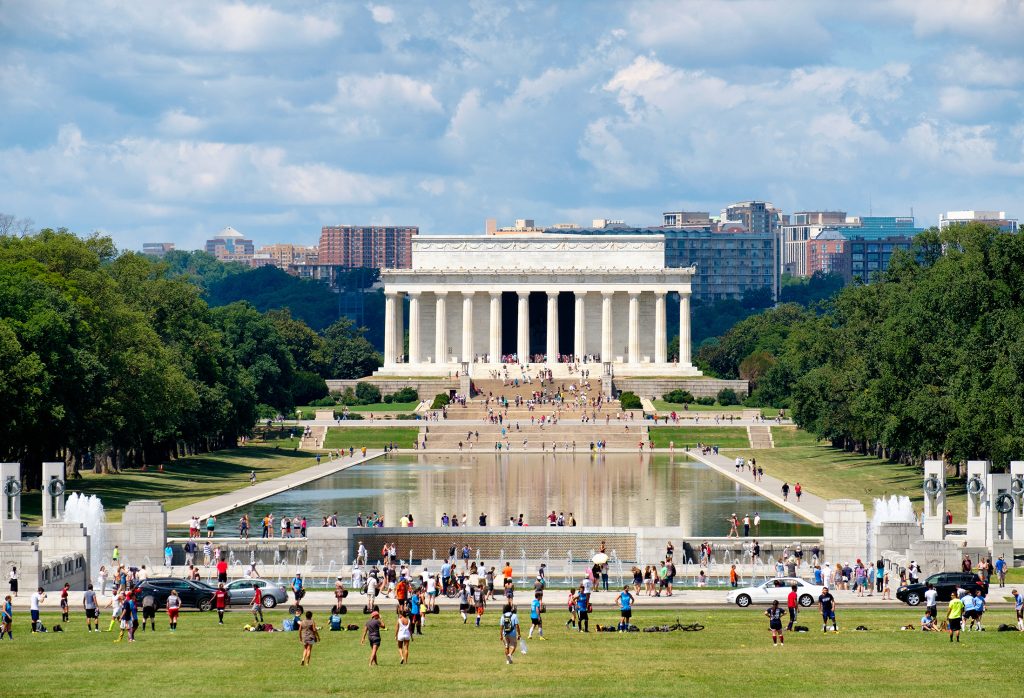
Visit the White House, US Capitol, National Archives and Smithsonian museums, an immersive civics lesson for GCSE Civics or Politics groups.
> Click here to learn more about Kipling Tours Washington D.C. History School Trips
Wander MoMA, Guggenheim and the Metropolitan Museum of Art. Pupils sketch in Central Park and create street-art photo journals. Ideal for GCSE/A-level Art & Design.
> Click here to learn more about Kipling Tours New York Art School Trips
Discover NASA’s Kennedy Space Center, explore the Everglades ecosystem and dive into marine biology at the Florida Keys. Perfect for KS4/KS5 Science departments.
> Click here to learn more about Kipling Tours Florida Science and STEM School Trips
Tour Silicon Valley companies, visit the Federal Reserve Bank of San Francisco and analyse real-world case studies. Tailored for GCSE/A-level Business Studies.
> Click here to learn more about Kipling Tours San Francisco Business Studies School Trips
A school trip to the United States can unlock entirely new perspectives – geographical, historical and cultural – that textbooks alone can’t deliver. Once you understand ESTA, know what to expect at customs and plan practical details (insurance, money, phones), the rest falls into place. Collect passport details early, guide parents through the £21 ESTA fee, and run a quick mock CBP interview in class. From there, everything focuses on learning outside the classroom: exploring the Grand Canyon, debating US history in Washington DC or sketching street art in New York.
Whether you’re a first-timer or a seasoned US traveller, a little preparation goes a long way. Kipling Tours will handle your flights, hotels, itinerary, guides and restaurant reservations, so you can focus on the learning. Reach out to us, and we’ll make sure your next American adventure runs smoothly from departure to return.

Kipling Tours help teachers plan unforgettable, stress-free trips that take learning beyond the classroom.

October 20, 2025 by Andy Broom
Take your students somewhere truly extraordinary with fully supported school trip along the road less travelled.

October 20, 2025 by Andy Broom
Residential visits for schools are packed with learning, adventure and lifelong memories. With the right planning and packing, your students will be ready to make the most of every moment.

September 11, 2025 by Andy Broom
Washington DC school trips offer a rare mix: world-changing political history, incredible museums, and immersive experiences that go way beyond the classroom.
Our tours are financially protected by our ATOL Licence and your payments are held in our trust account with the Travel Trust Association
If you are planning a tour with us, we can arrange an inspection trip so you are able to familiarise yourself with the destination and conduct any risk assessments your school may require.
Many tours travel with a full-time guide who will look after your group in the destination, and you will always be able to contact our UK office which is manned 24/7.